Tuesday, 18 December 2012

New film, new script


FADE IN – Footage of a baby smiling and laughing. Sound of a voice over a speaker system with faint cheering in the background.
HARRY (VO):

This next song is for you guys. Thanks for making it number one.

Audio fades into a rock song remnant of rock songs from the early 70s. At the same time, footage changes to the baby in a paddling pool in the summer, he is giggling.

JANE (VO):

He was always a happy little boy.

As JANE talks, an array of footage from when HARRY was a baby is played.

JANE (VO):

He only really cried if he fell over.

Transition to see JANE sitting and facing the camera.

JANE:

Harry always loved music. We used to put the Star Wars soundtrack on for him and he used to sing us little songs so we were never surprised about how much music influenced him growing up.

FADE IN – footage of HARRY singing as a child.

Transition to HARRY.

HARRY:

I started learning guitar four years ago, drums nearly two years ago.

Transition to HARRY playing drums or guitar in his studio.

HARRY (VO):

I just like how I can escape with music. Just kinda, forget everything else for a while and go and have a jam or whatever.

Transition back to HARRY.

HARRY:

I managed to write and record an album last year. I managed to get it put on iTunes and then things just went mental.

Transition to HARRY doing some editing on his computer. Audio of a radio show.

DJ (VO):

And it’s time to reveal this week’s number one single! So, from the self-titled debut album, here’s Paradox by 16 year old sensation, Harry.C!

Audio of the song ‘Paradox’.

HARRY (VO):

I don’t want any special treatment or anything though. I still go to that same school and carry on like normal except I get a little more attention now…

Cross-fade with shot of JANE.

JANE:

I was so proud of him when his single reached number one – I always knew he’d do well. But not long after that, doctors discovered a tumour in his brain that they couldn’t remove and… because of the growth rate, they don’t think that Harry’s got long left.

Cut to shot of HARRY.

HARRY:

I’m not scared of dying. I’m not really scared about the tumour; I try not to think about it really. I just focus on music really.

Cut to shot of HARRY playing an instrument.

HARRY (VO):

If it gets too much I just pick up a guitar or my drumsticks and play something. You know, sometimes you’ve just gotta get on with things.

Cut to shot of HARRY.

HARRY:

I know I’ve not got long left but I don’t want to spend my time moping around, I want to do what makes me happy.

Monday, 17 December 2012

Analysing Documentary Posters

After looking at the conventions of a documentary, and earlier in the year looking at general film posters like 'The Dark Knight' and 'Cyrus' (See Here), I decided that I would look into and research documentary posters to discover the conventions which I could follow to create my own film poster. I looked at 'Supersize Me', 'An Inconvenient Truth' and 'March of the Penguins'.


After looking at these three posters, it is evident that there are certain codes and conventions to producing a poster for a documentary:
1) One main image - this large, main image is used to capture the attention of your viewers and usually conveys the main subject of the documentary. It is the first thing that the audience of your poster will see when they glance at your poster.
2) A large title - the title, along with the main image is probably the main thing that a viewer will see when glancing at your film poster so you have to make it stand out. The three above posters have achieved this by having large titles which contrast in colour to the rest of the poster.
3) A small tagline - a tagline allows the reader to learn of the contents of the documentary in one simple sentence and is a key selling point as to whether a person decides if they want to see your documentary.
4) A simple colour scheme - this applies to most film posters as they tend to stick to a simple colour scheme so as to look professional and not too busy to look at.
5) A block of credits - this simply details a lot of the people involved in the production and distribution of the documentary. It is usually made up of a small font and is located at the bottom of a poster. There may also be details of awards the documentary has won.

Film Poster Audience Research


1) Do you take notice of posters?
Harrison Calaby (16) Yes
Ben Thorpe (18) Yes
Robert Watts (44) Yes
Linda Goddard (47) Yes
John Seaman (62) Yes
Alice Calaby (92) Yes
Jack Latoy (18) Yes
Sam Hitchins (17) Yes
Fletcher Watts (11) Yes
Beth Calaby (12) Yes
- Out of my sample, all ten say that they take notice of film posters so with so much ‘competition’,. I have to make sure that mine really stands out.

2) What would you expect a film poster to have on it?
Harrison Calaby (16) At least one big picture and a large title.
Ben Thorpe (18) An eye-catching image.
Robert Watts (44) One or two pictures but not much text.
Linda Goddard (47) Main picture, big title and a slogan/tagline.
John Seaman (62) A big, eye-catching title.
Alice Calaby (92) A big title and the names of the actors in it.
Jack Latoy (18) A grabbing image and bold title.
Sam Hitchins (17) A big title and the names of the cast.
Fletcher Watts (11) Lots of colours!
Beth Calaby (12) The name of the title to be big and lots of colours.
- Lots of my sample mentioned images and a large title. A couple said about colour and naming the cast but they were not said by the majority so I wouldn’t class those as essential factors.

 3) Do you have a favourite poster? If so what is it?
Harrison Calaby (16) The Dark Knight poster with the joker on it.
Ben Thorpe (18) Pretty much any Batman poster.
Robert Watts (44) Forrest Gump.
Linda Goddard (47) I don’t really have one.
John Seaman (62) Casablanca.
Alice Calaby (92) Gone with the Wind.
Jack Latoy (18) Jurassic Park.
Sam Hitchins (17) Scott Pilgrim vs. The World.
Fletcher Watts (11) Wall.E
Beth Calaby (12) Any of the Harry Potter posters.
- Most people have said that their favourite posters are those posters that people consider to be ‘iconic’ like Jurassic Park and Forrest Gump so I may try to imitate these styles while still putting my own spin on it.

4) Do you have any posters on your bedroom wall, do you consider them art?
Harrison Calaby (16) No but I think they are artwork.
Ben Thorpe (18) I’ve got the Dark Knight ‘why so serious’ in my room and I guess it can be considered art.
Robert Watts (44) I did when I was younger but not anymore but I think that film posters are pieces of art.
Linda Goddard (47) I used to have the Breakfast Club poster on my bedroom wall when I was younger but I don’t think that posters count as art.
John Seaman (62) No and I think that the old, hand drawn posters can be considered art – not the newer modern ones though, as they’re all done on a computer – that, to me, isn’t art.
Alice Calaby (92) Not in my room but I have a Gone With The Wind poster in my study. For me, it’s art.
Jack Latoy (18) I don’t have posters in my room but I’d quite like to get some. I think that some posters are works of art, others don’t take much effort.
Sam Hitchins (17) I don’t have film posters in my room but I had a Ponyo poster when I was younger. Yeah I guess they can be considered as art.
Fletcher Watts (11) I’ve got a Ben 10 and Spongebob movie poster in my bedroom. They’re not art though.
Beth Calaby (12) I’ve got a Harry Potter poster in my bedroom. I don’t really know if a poster is art.
- From my sample, not many have film posters on their walls. However, I think from a marketing point of view, it is good to create a prominent and effective poster to gain recognition for a film.

Sunday, 16 December 2012

5 Simple Mistakes Documentary Filmmakers Make

Courtesy of Col Spector at http://www.raindance.org/blog/5-simple-mistakes-documentary-filmmakers-make/ :-

Documentary makers know that there’s more to the art then just letting the camera roll. There are strategies to employ, and in choosing the right ones, there are mistakes to be made. Don’t get stuck in one (or more!) of the 5 mistakes documentary makers make:

1) Not asking a question or choosing a theme

I think the biggest mistake people make is going ahead with making a documentary just on the basis that they have found a subject that interests them. This can sometimes result in a great film, but rarely. A documentary has to ask a question or have a big theme. By “big theme” I don’t mean it’s got to be worthy – another documentary no-no that I’ll get to later—I just mean its got to have a driving force of some sort. Before filming, ask yourself, what question am I asking and how does this film express my worldview?

2) Choosing a ‘worthy’ subject

People who decide to go off and make a documentary on the basis that the subject is ‘worthy’ get themselves into a tricky spot. You might find that a righteous topic is so widely researched that there aren’t many new upheavals to make. You also might find that the footage doesn’t create an entertaining feature. Interesting, worthy documentaries might work for a TV insert or news piece but are unlikely to make a great film.

3) Using poor technique to recreate events

When watching TV documentaries, one of my biggest Room 101s is when directors try to portray a past event by going all low-resolution and throwing the camera around or wheeling in bad actors and making them go out of focus. There’s more to drama reconstruction than the blurry, home movie look.

For great drama reconstruction watch Man On Wire (which also benefits from some extraordinary archive film footage).

4) Using bad music

The soundtrack of your documentary can really make or break its mood. Don’t trust the guy that you just met who offers to write an entire score for your film. You, the director, should have your own strong ideas of how the music will function in the film. From there, it’s your responsibility to choose the right person for the job, someone who understands your ideas and has the knowledge and talent to make those ideas come to life.

5) Filming without a vision

At the end of a day a great documentary has to have a strong vision, and that vision informs every creative and editorial step along the way. Like mentioned before, your music guy has to share your vision; so does everyone else in the process. Only when everyone is on the same page can the documentary achieve its intended goals.

The Conventions of a Documentary

After researching the history of Documentaries, I thought that it would make sense to research the typical conventions to get a basic grip on the guidelines for what I should include in my documentary and whether there is any room to be original and different. I discovered that there are a fair few conventions but below are the most prominent and, I think, important:

Archival Footage and Photographs
Archival materials include old photographs and videos, newsreel footage, and even shots from fiction films. For example, 'The Atomic Cafe' makes exclusive use of archival footage from the 1940s and 1950s to spoof Americans’ Cold War fear of an atomic bomb, and Feed culls footage from the 1992 primaries coverage and outtakes to show presidential hopefuls being anything but presidential. This convention is something that I really hope to include in my documentary as I believe that it will add more realism to the story.


Talking Heads
Talking heads are people interviewed to explain or comment on the text’s subject. These people usually are shown in their offices (sometimes with a wall of books behind them) or in their homes. For example, 'Hearts and Mind's includes interviews with both American and Vietnamese people to offer their perspectives on the war. This is a convention I definitely want to include in my documentary but I will have to think about how I am going to make the interviews interesting to watch.


Jiggly Camera
A wobbly camera is often attributed to documentary. As cameras became more portable and more affordable, filmmakers did more on-location shooting, and keeping the camera steady was somewhat difficult when it came to following the action. Steadicam, a camera stabilizing system, aids in correcting what some perceive as a problem. The fiction film 'The Blair Witch Project' makes use of the jiggly camera as a means of reinforcing its documentary-like style. I will more likely than not include this convention in my documentary.


Voiceover Narration
Voiceover narration occurs when a voice is heard on the soundtrack without a matching source in the image. In other words we hear the voice speak but we cannot see the speaker utter the words. The voice often explains or comments on the visuals. Early documentary made extensive use of this convention, including Pare Lorentz’s 'When the Plow Broke the Plains' and 'The River'. I'm not sure whether to include this in my documentary but it could make it more interesting to watch.


Re-enactments
A re-enactment stages real events that already have occurred. Sometimes they include the people who experienced the events orginally, but more often they incorporate actors playing parts. 'The Thin Blue Line' makes extensive use of this convention to assist in making its argument. However, most documentary makers prefer shoot events when and where they actually occur. I would like to include some re-enactment footage in my documentary but I'm not really sure how to go about it.


Real People
For the most part, the people we see in a documentary are real people. We can assume that if we went to Flint, Michigan, we may meet the “Pets or Meat” lady from 'Roger & Me'. Or if we went to Texas, we may meet the people participating in the content to win a new truck in 'Hands on a Hard Body'. While my documentary won't be completely real, I aim to use a real family who have real connections and chemistry on screen.

The History of the Documentary

Because I have had a complete change of plan with my short film, I thought it fitting to do some research into documentaries so that I have a better understanding of them when it comes to filming and editing my short documentary. I started off by looking at the history of the documentary:


The Lumiere Brothers
Documentary began when the first films were invented by the Lumière brothers in 1895. The Lumières created a camera that could only hold 50 feet of film stock and their films were short unedited clips capturing the life around them. These were called ‘Actualites’.
 
‘Un Train Arrivée’ (1895) Their most famous film simply shows a train pulling into a station, however audiences were fascinated by these first moving photographs as they were able to see the detail of movement captured by a film camera for the first time.
 
Documentary, as we know it today, began with ‘Nanook of The North’, made by Robert Flaherty in 1922. In fact the word ‘documentary’ was invented by John Grierson to describe this film. ‘Nanook’ was the first feature length factual film and the first to use what Grierson described as ‘the creative interpretation of reality’ . This meant that Flaherty had staged most of the scenes for the camera in order to make the film more dramatic and exciting for the audience.
John Grierson
Grierson went on to head the GPO film unit in England in the 1930s and he became a major exponent of this poetic-realist approach to documentary. ‘Nightmail’ (1936) began as an informational film about the mail train from London to Edinburgh but the filming and editing emphasised the poetic elements of film form: movement, rhythm, light and sound. Critics of Grierson accused him of neglecting the social and political issues in his films in favour of a modernist approach that celebrated machinery more than human beings.
 
It was this backlash that led to the next major development of documentaries in the 1950s and 1960s. Direct Cinema, a movement that began in the United States, aimed to present social and political issues in a direct, unmediated way giving the impression that events are recorded exactly as they happened without the involvement of the film-maker. The development of smaller lighter film cameras using smaller film stock (16mm as opposed to 35mm film which is used in feature films and in documentaries up to that time) pioneered by news camera men allowed the camera to be held on the shoulder (hand-held) and to film in a more spontaneous manner.
Key names in this movement are D.A. Pennebaker, The Mayles Brothers and Fred Wiseman . The modern social issue documentary such as Supersize Me has its origins in Direct Cinema. The filmmaker usually has a political and/or social agenda and seeks to present the events as ‘real’ even though they are in full control of the editing process.
At the same time as Direct Cinema was being developed in America, a similar movement was happening in France called Cinema Vérité (‘cinema truth’). Cinema Vérité is a minimalist style of film making that conveys the sense that the viewer is given a direct view of what was actually happening in front of the camera without the artifice usually incorporated in the film-making process. Cinema Vérité favours hand-held camera, natural lighting, location filming, and direct sound.
Jean Rouch
Jean Rouch was an important documentarian working in this style in the 1960s. However Cinema Vérité techniques have also been used by drama film-makers such as Ken Loach leading to the term ‘drama-documentary’ being used to describe films like ‘Cathy Come Home’.
The use of cinema vérité techniques can make a film seems more ‘real’ and truthful to an audience and in recent time film-makers have used the codes and conventions of the documentary to fool audiences into thinking a programme or film is factual when it isn’t. This form of film-making is called mockumentary.
Because mockumentaries demonstrate how easily the codes and conventions of documentary can be faked, they can often cause us as viewers to consider why we place so much faith in documentary itself. 

Examples of mockumentaries: 'The Majestic Plastic Bag' and my favourite mockumentary, 'This is Spinal Tap'


Saturday, 15 December 2012

Change of plan...

Due to practicality issues, I have had to abandon my apocalypse idea but because I like the idea so much, I am going to save the project for the summer when I have the time to do it well as a personal project. In light of this, I have thought back to the other ideas I came up with for a short film and have given some thought into the 'Sophie' idea (http://ecalabya2production.blogspot.co.uk/2012/10/pitch-1-sophie.html) but as it was no longer realistic to do a documentary on her, I adapted the idea slightly. More detail in the video:


Friday, 14 December 2012

Ancillary Practice Task: Film Poster

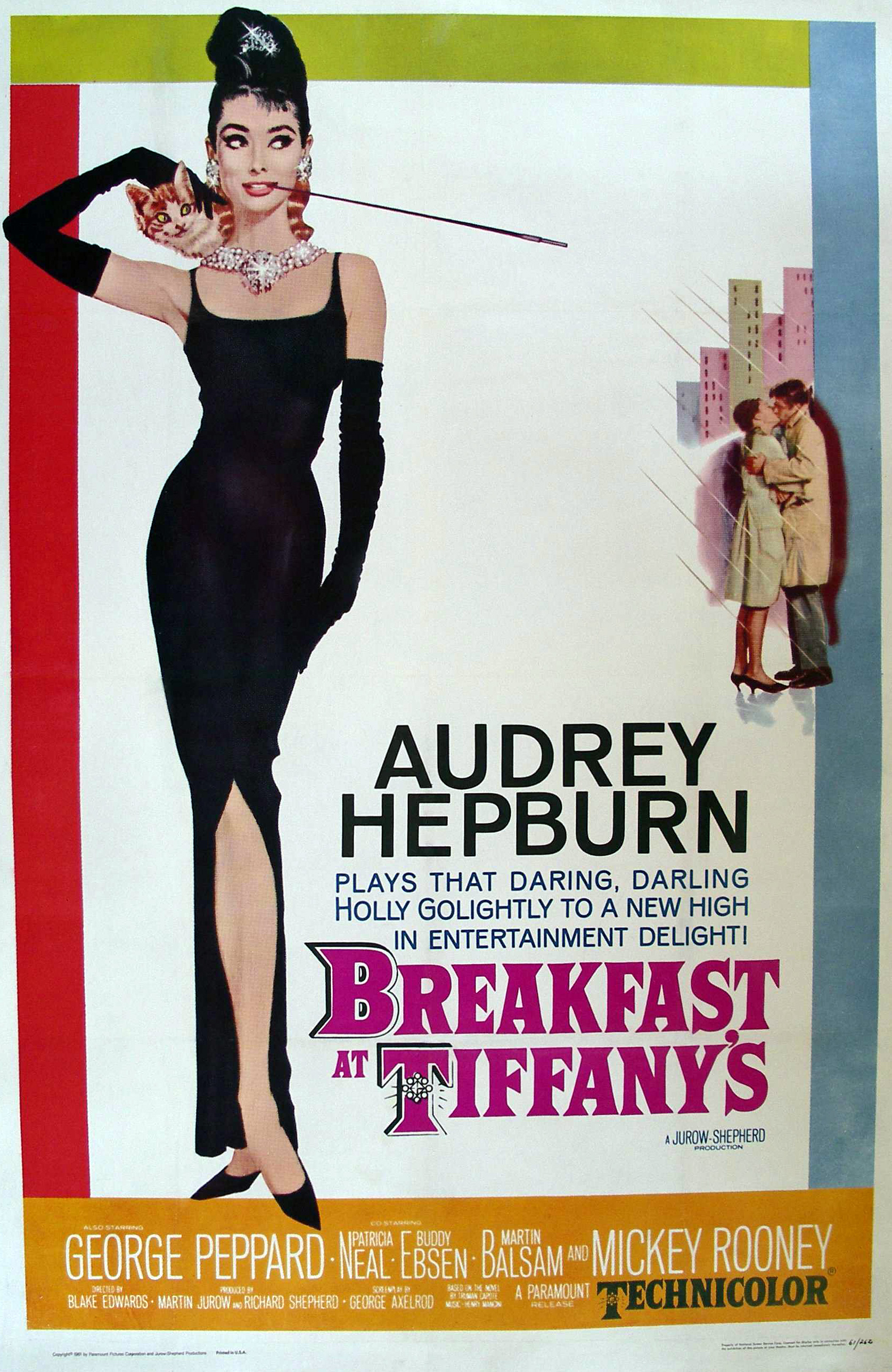
To help us prepare for completing our ancillary tasks in late January, Mr Cole set us the task of creating a film poster with original images in a week. We had to pick an era to work in: classic Hollywood, the golden age, modern - independant or modern - mainstream. I worked with Lizzie and we agreed that it would be interesting to create a film poster reminiscent of Audrey Hepburn's posters in the 1960s. We loved the high contrast, almost hand drawn looking images and how the strong black of Hepburn's dress makes her stand out from the pastel-coloured background. Immediately we had loads of ideas and settled upon doing a photoshoot and taking it from there.

Beings I had a black dress, we decided that I would be the model for the photoshoot. Lizzie swept my hair to one side and raised the volume of my hair at the back to imitate a classic 60s hairdo. Then we had to think about make-up. In our research, we had come across some pictures of Twiggy and her classic fake 'drawn-on eyelash' style and we decided to copy the style. As well as the fake eyelashes, I had silver eyeshadow and black eyeliner to create a really bold look.

Left: Twiggy's iconic 'drawn-on eyelash' look and Right: our take on it
Once we had taken loads of photos and decided on the one we wanted to use, we started editing. We put a high contrast onto the image but then desaturated it slightly so that it didn't look too unrealistic. We then thought about the kind of titling we wanted and ended up deciding on a hand-drawn title -which Lizzie did very well.


When putting everything together on Photoshop, we felt that the title lacked something so we ended up adding a pink colour to match that of the pink and black border that we put around the outside of the poster. We then added a slight drop shadow to give it depth, added a slogan and some other titling digitally and it was done!

Tuesday, 11 December 2012

Slow Progress...

I am currently working on writing the script for my short film. I decided to go for my apocalypse idea and build upon that story. In my pitch, I didn't have a clear cut story for my film but I have now developed that into a short story. Because I find it much easier to write in prose rather than in a script format, I wrote the beginning of the story as a piece of prose to get my brain into it's creative gear. Once I had written the beginning and transferred this into a screenplay, it was much easier for me to continue the story in the script format.

My film tells the story of Dylan, a young adult male in a post-apocalyptic world, living a simple life in an old, abandoned warehouse with only his mother and dog left for company. One day, when returning from scavenging, Dylan's dog sniffs out a box. This box contains letters, photographs and a journal belonging to a woman who died of the virus that killed so many in the apocalypse. He discovers things about her and her life story and how she had to be separated from her family. He then leaves his mother to return the box to the family it comes from.

The only problem I will have is putting all this into five minutes. But I'm working on it...

Below is my short story:


Hot and harsh light of the sun cast long shadows across the earth, across a broken and scarred landscape. The shadows of long left crops lay the scarred concrete of a long road. Heat shimmered in the air as a figure moved steadily onwards, his stride strong and determined like a man with purpose. 

He was a man who had stared death in the eye and lived to tell the tale.

The landscape was the same as far as the eye could see, desolate and harsh. Inhospitable yet once home to many. The hazy figure was not alone, beside him came the shape of a lumbering hound, moving steadily with a loll to his gait.

The male moved with an assurance to his stride, like he was accustomed to survival. It was as if he had been here many years, his actions the same day in day out. In his grasp he held a large bag, full of scavenged items… the necessities of survival. Memories flickered through his weary mind, all of days long passed. 

The male only stopped when a soft whimper echoed off hot concrete; turning his head he looked at his loyal companion to find him nuzzling a small box. Moving warily he crouched to lift it. His hand shook as he reached for the clasp, lifting it softly he opened the small lid to reveal memories. The letters and belongings of a person long dead he supposed, he would never know who but what he did know is that this was the first sign of the civilization that once dominated the world that survived, raw and untouched. His fingers stretched out to touch the worn and dry paper, gently brushing over it all leaving a tingling sensation upon his grizzled and hardened flesh.
The only sounds to be heard were the soft pants of the hound, his own deep breathing and the harsh whistle of a dry wind which whipped across his skin, harsh and hot.

The dingy interior felt cold in comparison to the harsh world outside, it’s corrugated iron walls orange with rust and debris spread across the hard dirt floor. The soft blue glow of gas fed flames flickered as a feminine figure in a large, billowing skirt and loose T-shirt tended to a pot. Dumping the bag he coughed softly to make his presence known and smiled in return as the woman, in her middle years fixed him with a bright smile and spoke softly.

“You took your time! I’m glad you’re back.” His eyes met with hers and he nodded - the box still in his hands.  The hound bounded forwards to be met with open arms by the woman who in those few minutes took on a new youthfulness as she fussed the large dog. When she set eyes on the bag, it’s bulk showing signs of being full, she smiled again and whispered.

“Thank you, let’s hope we can make use of this and keep it…” then she moved and her arms encircled him, he returned the gesture with one arm before stepping back to sit in the dark corner beside his sleeping bag and look through the box, carefully studying every inch of each sheet of paper. His fingers brushing over text as he strained to read the words, scrawled across the dry paper. His eyes strained to read, a task he had not performed in many months. 

His hands moved across the front of a journal, maybe a vain attempt to be remembered. He began to read, finding within the pages the legacy of a community and a family. The legacy of the unknown victim who once possessed the box, beneath the journal rested a simple watch. He lifted it and unclasped the small steel case, his eyes wandering over the simple design. Marvelling at the engineering of days gone by, frozen on midnight making him think perhaps this human’s fate came in the dark of night. His eyes continued to wander as he found an inscription, reading it aloud.
“The past is a ghost, the future a dream and all we ever have is now.”  He gently brushed his thumb over the inscription muttering.

“Who were you…? What secrets have you left in your absence…?” then he placed the watch aside, furtively glancing over his shoulder to check what the middle aged woman was doing before he picked up the journal and began reading softly to himself. His eyes flickering across the pages of a history, a life that ended before its tale could be finished it seemed. 

As he read he found hints and clues as to unfinished business, this person had a family in hiding they never managed to reach as the world descended into chaos… maybe if he could find them. .. He continued to read, searching through the hints and clues. It seemed they had walked the very same road, in the very same direction for many days as he and his companion, searching. Hoping. So there were other humans… The person wrote of being hounded and pursued; bandits giving many weeks chase. How their community needed the supplies he carried. How their child would soon starve if they did not get the supplies there in time.  He began to recognize the hand writing and outlook, he was fairly confident it was written by a woman.

The woman was protective over her family, of her husband who bore marks of protecting her and saving their child’s life and then he understood what he needed to do, he needed to protect his own charge by hiding her with supplies before finding this community. Joining them to aid in their protection, the book also spoke of a rich and thriving town being built, not like those of old but new… fortified against the bandits. He needed to take his mother there, let her find someone to settle with and he needed to aid in their protection. To finish her legacy.