Saturday, 15 December 2012

Change of plan...

Due to practicality issues, I have had to abandon my apocalypse idea but because I like the idea so much, I am going to save the project for the summer when I have the time to do it well as a personal project. In light of this, I have thought back to the other ideas I came up with for a short film and have given some thought into the 'Sophie' idea (http://ecalabya2production.blogspot.co.uk/2012/10/pitch-1-sophie.html) but as it was no longer realistic to do a documentary on her, I adapted the idea slightly. More detail in the video:


Friday, 14 December 2012

Ancillary Practice Task: Film Poster

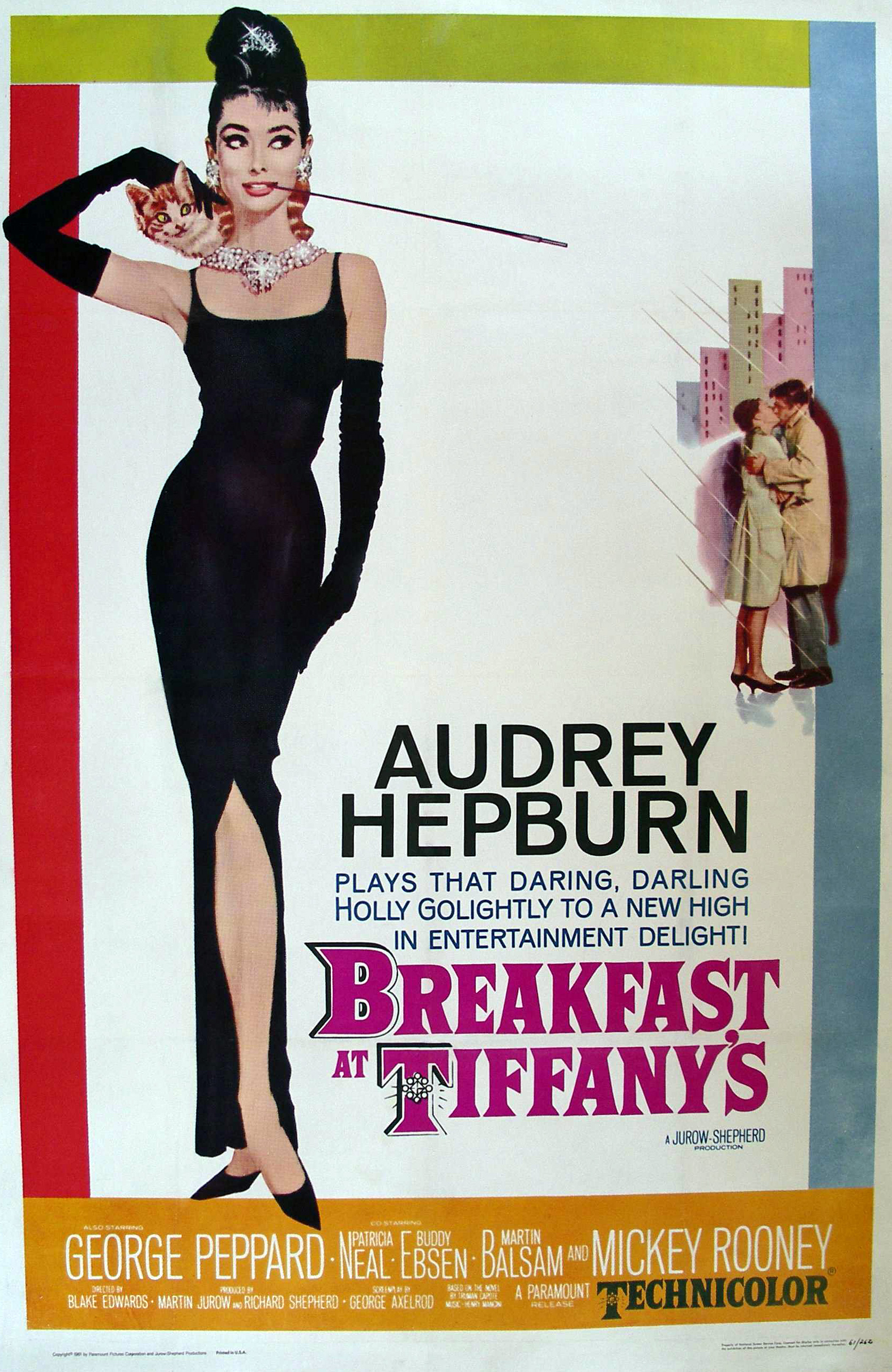
To help us prepare for completing our ancillary tasks in late January, Mr Cole set us the task of creating a film poster with original images in a week. We had to pick an era to work in: classic Hollywood, the golden age, modern - independant or modern - mainstream. I worked with Lizzie and we agreed that it would be interesting to create a film poster reminiscent of Audrey Hepburn's posters in the 1960s. We loved the high contrast, almost hand drawn looking images and how the strong black of Hepburn's dress makes her stand out from the pastel-coloured background. Immediately we had loads of ideas and settled upon doing a photoshoot and taking it from there.

Beings I had a black dress, we decided that I would be the model for the photoshoot. Lizzie swept my hair to one side and raised the volume of my hair at the back to imitate a classic 60s hairdo. Then we had to think about make-up. In our research, we had come across some pictures of Twiggy and her classic fake 'drawn-on eyelash' style and we decided to copy the style. As well as the fake eyelashes, I had silver eyeshadow and black eyeliner to create a really bold look.

Left: Twiggy's iconic 'drawn-on eyelash' look and Right: our take on it
Once we had taken loads of photos and decided on the one we wanted to use, we started editing. We put a high contrast onto the image but then desaturated it slightly so that it didn't look too unrealistic. We then thought about the kind of titling we wanted and ended up deciding on a hand-drawn title -which Lizzie did very well.


When putting everything together on Photoshop, we felt that the title lacked something so we ended up adding a pink colour to match that of the pink and black border that we put around the outside of the poster. We then added a slight drop shadow to give it depth, added a slogan and some other titling digitally and it was done!

Tuesday, 11 December 2012

Slow Progress...

I am currently working on writing the script for my short film. I decided to go for my apocalypse idea and build upon that story. In my pitch, I didn't have a clear cut story for my film but I have now developed that into a short story. Because I find it much easier to write in prose rather than in a script format, I wrote the beginning of the story as a piece of prose to get my brain into it's creative gear. Once I had written the beginning and transferred this into a screenplay, it was much easier for me to continue the story in the script format.

My film tells the story of Dylan, a young adult male in a post-apocalyptic world, living a simple life in an old, abandoned warehouse with only his mother and dog left for company. One day, when returning from scavenging, Dylan's dog sniffs out a box. This box contains letters, photographs and a journal belonging to a woman who died of the virus that killed so many in the apocalypse. He discovers things about her and her life story and how she had to be separated from her family. He then leaves his mother to return the box to the family it comes from.

The only problem I will have is putting all this into five minutes. But I'm working on it...

Below is my short story:


Hot and harsh light of the sun cast long shadows across the earth, across a broken and scarred landscape. The shadows of long left crops lay the scarred concrete of a long road. Heat shimmered in the air as a figure moved steadily onwards, his stride strong and determined like a man with purpose. 

He was a man who had stared death in the eye and lived to tell the tale.

The landscape was the same as far as the eye could see, desolate and harsh. Inhospitable yet once home to many. The hazy figure was not alone, beside him came the shape of a lumbering hound, moving steadily with a loll to his gait.

The male moved with an assurance to his stride, like he was accustomed to survival. It was as if he had been here many years, his actions the same day in day out. In his grasp he held a large bag, full of scavenged items… the necessities of survival. Memories flickered through his weary mind, all of days long passed. 

The male only stopped when a soft whimper echoed off hot concrete; turning his head he looked at his loyal companion to find him nuzzling a small box. Moving warily he crouched to lift it. His hand shook as he reached for the clasp, lifting it softly he opened the small lid to reveal memories. The letters and belongings of a person long dead he supposed, he would never know who but what he did know is that this was the first sign of the civilization that once dominated the world that survived, raw and untouched. His fingers stretched out to touch the worn and dry paper, gently brushing over it all leaving a tingling sensation upon his grizzled and hardened flesh.
The only sounds to be heard were the soft pants of the hound, his own deep breathing and the harsh whistle of a dry wind which whipped across his skin, harsh and hot.

The dingy interior felt cold in comparison to the harsh world outside, it’s corrugated iron walls orange with rust and debris spread across the hard dirt floor. The soft blue glow of gas fed flames flickered as a feminine figure in a large, billowing skirt and loose T-shirt tended to a pot. Dumping the bag he coughed softly to make his presence known and smiled in return as the woman, in her middle years fixed him with a bright smile and spoke softly.

“You took your time! I’m glad you’re back.” His eyes met with hers and he nodded - the box still in his hands.  The hound bounded forwards to be met with open arms by the woman who in those few minutes took on a new youthfulness as she fussed the large dog. When she set eyes on the bag, it’s bulk showing signs of being full, she smiled again and whispered.

“Thank you, let’s hope we can make use of this and keep it…” then she moved and her arms encircled him, he returned the gesture with one arm before stepping back to sit in the dark corner beside his sleeping bag and look through the box, carefully studying every inch of each sheet of paper. His fingers brushing over text as he strained to read the words, scrawled across the dry paper. His eyes strained to read, a task he had not performed in many months. 

His hands moved across the front of a journal, maybe a vain attempt to be remembered. He began to read, finding within the pages the legacy of a community and a family. The legacy of the unknown victim who once possessed the box, beneath the journal rested a simple watch. He lifted it and unclasped the small steel case, his eyes wandering over the simple design. Marvelling at the engineering of days gone by, frozen on midnight making him think perhaps this human’s fate came in the dark of night. His eyes continued to wander as he found an inscription, reading it aloud.
“The past is a ghost, the future a dream and all we ever have is now.”  He gently brushed his thumb over the inscription muttering.

“Who were you…? What secrets have you left in your absence…?” then he placed the watch aside, furtively glancing over his shoulder to check what the middle aged woman was doing before he picked up the journal and began reading softly to himself. His eyes flickering across the pages of a history, a life that ended before its tale could be finished it seemed. 

As he read he found hints and clues as to unfinished business, this person had a family in hiding they never managed to reach as the world descended into chaos… maybe if he could find them. .. He continued to read, searching through the hints and clues. It seemed they had walked the very same road, in the very same direction for many days as he and his companion, searching. Hoping. So there were other humans… The person wrote of being hounded and pursued; bandits giving many weeks chase. How their community needed the supplies he carried. How their child would soon starve if they did not get the supplies there in time.  He began to recognize the hand writing and outlook, he was fairly confident it was written by a woman.

The woman was protective over her family, of her husband who bore marks of protecting her and saving their child’s life and then he understood what he needed to do, he needed to protect his own charge by hiding her with supplies before finding this community. Joining them to aid in their protection, the book also spoke of a rich and thriving town being built, not like those of old but new… fortified against the bandits. He needed to take his mother there, let her find someone to settle with and he needed to aid in their protection. To finish her legacy.


Monday, 15 October 2012

Looking at Villians

From thescriptlab.com

FEMME FATALE
The French translation of Femme Fatale literally means “deadly woman." The Femme Fatale character is seductive, mysterious, and most of all – extremely dangerous. Her greatest power is her ability to entrance her victims with her appearance, and lead them into dangerous situations.
While she often uses her feminine charm and sexuality to get her way, there are times when she can be deceitful and lie. She is always physically well-endowed and defies normal standards of beauty with her exceptional appearance. While she is almost always a villain, there are times when she transforms into an anti-heroine. However, even in these tales, she usually drives her lover to the point of obsession and insanity. While her personality traits usually fall into a negative category, she can also be a symbol of female empowerment and freedom.
Femme Fatale in Film:
In early film, the Femme Fatale was introduced as an evil temptress. However, in the 1940's, the image of the Femme Fatale in screenwriting flourished with the introduction of Film Noir. In these screenplays the Femme Fatale was manipulative, double-crossing, unloving, and gorgeous. If the hero in the film chose to help her, this decision would lead to a path of tragedy and death. While the Femme Fatale saw her boom in the era of Film Noir, she still exists in modern film today. Her coy manner, sensuality, and undeniable allure ensures that she will forever be a part of film and history.

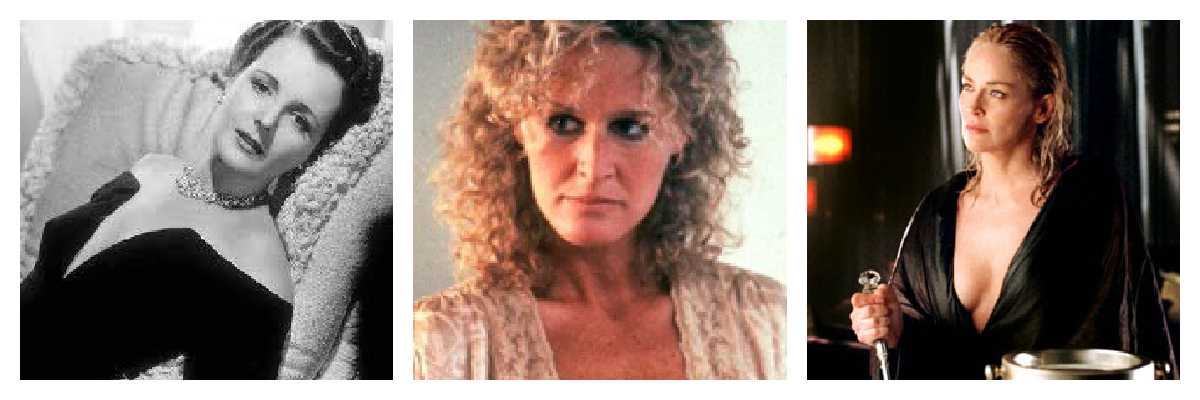
Examples of Femme Fatals in film: Brigid O'Shaughnessy in 'The Maltese Falcon', Alex Forrest in 'Fatal Attraction' and Catherine Tramell in 'Basic Instinct'


PSYCHOTIC
The Psychotic Villain is driven by his or her detachment from reality. It is certain that these villains suffer from some kind of mental illness, even if it is not specifically stated. Usually, the villain’s illness takes form in misplaced rage, explosive anger, or personality confusion.
Psychotic Villains can also suffer from grandiose delusion and hallucinations. A Psychotic Villain focuses his anger on an innocent victim, even though it is not rational. This Villain will stop at nothing to obtain his sinister goal, which often leads to his death or destruction.
Psychotic Villain in Film:
The Psychotic Villain has a huge presence in screenwriting and films. His violent actions can be written off to his psychotic nature, but a backstory can create a more sophisticated character. Psychotic Villains in film often immerse themselves in taboo lifestyles. Some of these villains participate in things like deviant sexual behavior, extreme anarchism, and even cannibalism.
In a screenplay, the greatest threat of the Psychotic Villain is the mysteriousness that surrounds him. His history is usually hidden, and his actions are unpredictable. The “unknown” attributes make the Psychotic Villain especially frightening. Because he has no rhyme or reason for the chaos he creates, his presence even more chilling.

Examples of Psychotic Villians in film: Hannibal Lecter in 'The Silence of the Lambs', Norman Bates in 'Psycho' and The Joker in 'The Dark Knight'


SEDUCER
Seducers knows what they wants and knows how to get it. Their aesthetic appeal and charming demeanor make those around them easy prey, like moths drawn to a flickering light. Unlike the Femme Fatale, the Seducer does not primarily aim to inflict harm upon others. More accurately, the Seducer’s foremost objective is to satisfy his/her own personal needs through the seduction of others without regard to the casualties left behind in the process.
Seducers in Film:
Since the concept of seduction is far from genre-exclusive, the Seducer is an incredibly malleable antagonist that could conceivably function within everything from romantic comedy to melodrama. Although the use of seduction clearly serves as a consistent character trait regardless of the genre, it is the goal of the seducer that often shifts with relation to the type of film this villain is placed within. In other words, Seducers are defined by what they hope to achieve through their acts of seduction. Some Seducers use sex as a means of accessing something more tangible; in other cases, the sexual gratification itself is the ultimate objective, and it is the repercussions of these sexual acts that negatively effect the protagonist.
It’s important to note, however, that seduction is not necessarily sexual. A Seducer might use sex, money, power, fame, a secret, classified information, or even just a piece of cake to convince another character to do something he or she does not want to do.

Examples of Seducers in film: Mrs Robinson in 'The Graduate', Norma Desmond in 'Sunset Blvd' and JD in 'Thelma and Louise'


DICTATOR
A cruel and malicious leader, the dictator rules over his territory without mercy or compassion. More so than many other villains, the dictator does not consider himself to be particularly villainous by nature, and what we perceive as his villainous actions are more the product of his vicious attempts to maintain order to his liking within his realms of power.
Dictators in Film:
Males more often than not occupy this role, but the Dictator could be written for a female as well. The Dictator often occupies a formal position of power, and while this power can reign over an whole community, town, city, or even an entire continent, what is most important is that the Dictator has an indisputable grip of control over the world, and the protagonist’s battle against this power often forms the backbone of the narrative.

Examples of Dictators in film: Warden Norton in 'The Shawshank Redemption', Nurse Ratched in 'One Flew Over The Cuckoo's Nest' and Idi Amin in 'The Last King of Scotland'

Looking at Heroes

From: thescriptlab.com

WARRIOR
A Warrior is a hero that has expertise in combat or warfare. This type of hero rises to the occasion by taking on a leadership position, and becomes extremely influential within his or her own circle. Warriors can be motivated by revenge, oppression, or moral responsibility. The traditional warriors tends to be serious and driven, often using action instead of dialogue to achieve their means. This role tends to skew more towards males, but the female Warrior has a strong presence in history, literature, and film as well.
Warriors in Film:
The character of Warrior is usually present in screenwriting through genres such as Action, Epic, and War. Although the traditional screenplay Warrior inflicts violence upon his enemy, this hero garners respect and admiration from the audience. The audience is able to justify the forceful actions of the hero Warrior because of his past, or because of the gross injustices he (or his counterparts) have endured. Strong and often silent, the Warrior becomes a hero because of his willingness to sacrifice himself for a cause.


Examples of Warriors in film: King Leonidas in '300', William Wallace in 'Braveheart' & Nathan Algren in 'The Last Samurai'

FOOL
Sometimes referred to as the “lovable loser,” the Fool is an anything-but-elegant hero. His desires rarely stray too far from our own – prove his value to society, garner the respect and praise of his peers/superiors, and perhaps find true love in the process – but the Fool is his own worst enemy: his physical clumsiness and intellectual limitations perpetually impede on the fulfillment of his own goals. And though we frequently share a good laugh at his expense and misfortune, we undoubtedly root for the Fool to succeed because, truth be told, we all can be fools sometimes, and there’s something undoubtedly reassuring about seeing the foolish underdog save the day and end up a hero.
Fools in Film:
Although the Fool could certainly be described as a tragic figure, he almost exclusively appears within the comedy genre, and rightfully so – the Fool starts as such an unfortunate character, we need to see him achieve that happy ending, thus making comedy the most suitable genre. In these films, there is very typically a secondary character to whom the Fool is actively trying to impress for various reasons, and a primary antagonist who actively attempts to disrupt this goal (often for his own gain). This antagonist is frequently a polar juxtaposition of the Fool (intelligent, suave, etc.), making the Fool’s eventual victory that much more satisfying.


Examples of Fools in film: Tommy in 'Tommy Boy', Harry and Lloyd in 'Dumb and Dumber' and Billy Madison in 'Billy Madison'

MUSE
In Greek mythology, the Muses were nine goddesses who inspired the creation of poetry and literature. Today, they take on a less literal role, but still are regarded as a key source of inspiration. We’ve heard on numerous occasions writer/directors discuss certain actors as their muse: for John Hughes it was Molly Ringwald; for Tim Burton, Johnny Depp. Whether male or female, dead or alive, the Muse speaks to us in a way that inspires us to achieve something great.
Muses in Film:
The 1997 Disney cartoon Hercules depicts the Muses in their original form as the nine Greek Goddesses. Most films, however, rely on the more contemporary symbolic understanding of the Muse. The Muse can be male or female and can work in most genres, but tends to appear most often within dramas and can take on either a lead or supporting role. While some Muses consciously act as mentor figures, aiming to inspire one or many individuals, the Muse can also act as an inadvertent form of inspiration for a character, unaware of his/her tremendous impact on the life of the protagonist.


Examples of Muses in film: John Keating in 'Dead Poet's Society', Jaime Escalante in 'Stand and Deliver' and Angela Hayes in 'Stand and Deliver'

 
SAVIOR
The Savior is one of the oldest characters in the history of storytelling, and arguably the most famous Savior character role is Jesus Christ from within the New Testament. The Savior is often a highly selfless character, willing to sacrifice him/herself for the greater good.
Saviors in Film:
In film, the Savior appears in most genres other than comedy, appropriate given that the notion of self-sacrifice is not usually a very humorous one. It is much more common with the Savior than other character roles for the Savior to die in the end, but this is not required of the role. What is required, however, is that the Savior has more than just his own life at stake. Whether it be just one person, a small town, or the entire human race, the Savior is responsible for the wellbeing of more than him/herself, and the plot requires a great deal of sacrifice from him/her in order to fulfill that responsibility.


Examples of Saviors in film: Oskar Schindler in 'Schindler's List', Neo in 'The Matrix' and Gandhi in 'Gandhi'

How to create a character

When thinking about how to create a memorable character, I stumbled across the following article by C.J. Perry from Film Slate Magazine which I thought gave good advice on how to create a truly memorable character.

"Creating memorable, sympathetic characters is something every screenwriter has struggled with at one point or another. Every writer approaches their screenplay from a different angle, whether they come up with the plot first, certain scenes that will serve as the lynchpin of the story, or even the third act that they will eventually have to build towards.
But none of it works without the characters. Every action is carried out through them in one way or another, every part of the story advances because of the characters in the screenplay. Even in a film that contains minimal dialogue or action, it will be the characters that make or break your screenplay. Here are ten things to keep in mind when writing characters.
1. Goal and Opposition Your character has to have something tangible that he or she wants to achieve. What does your character want and what will he or she do to achieve that goal? Wanting world peace is not a goal. If your character stops an ambiguously ethnic madman from blowing the planet into smithereens with some sort of doomsday device, that is a goal.
This doesn’t mean that the character has to operate in a vacuum; he or she can be influenced by outward forces and have internal conflicts and other desires along the way. Take the title character Clint Eastwood plays in “The Outlaw Josey Wales,” written by Philip Kaufman and Sonia Chernus. What starts out as a singular quest for revenge against the Union forces that killed his family and burned his house to the ground becomes so much more as Josey meets up with different characters (who all have their own goals) throughout the movie.
Your character’s goal is nothing without opposition. Even if what your character is going up against is vague, put a human face to it, or if it’s non-human, give it some quality that the audience can identify with. For Josey Wales, the larger symbolic enemy may be the Union Army, but its face is Captain Terrill, played with gleeful sadism by Bill McKinney. If there is more than one person or thing blocking your character, focus on a central antagonist, but don’t discard other threats to the main character. In the movie “Aliens,” written by James Cameron, Ripley and the rest of the crew fight a voracious outer space monster, but the character Carter Burke, played by Paul Reiser, serves as an excellent secondary opposition.
2. Motivation What makes your character chase his or her goal? What drives your character? In “The Screenwriter’s Bible,” David Trottier says, “The more personal it is, the more the audience will identify and sympathize with the character.” In “The Outlaw Josey Wales,” what sends Josey on his bloody trail of revenge? The slaughter of his family serves as all the motivation his character needs.
3. Backstory This ties in with the motivation, and it helps to explain the character’s actions throughout the movie. The backstory of your character should be decided before you sit down to write the first page of your screenplay. All people are flawed, and all people have needs. In “Slapshot,” written by Nancy Dowd, Reggie Dunlop, played by Paul Newman, is an aging minor league hockey player with nothing to look forward to as the end of his career draws near. His team is folding, and he has an ex-wife that he still loves and would desperately like to reconcile with. So when Reggie sees an opportunity to hold onto his career, bolster interest in the failing franchise he plays for and misguidedly tries to win back his ex, the audience can sympathize with him.
4. The Will to Act How does your character react to crisis? What does he or she do in the face of opposition? In “Slapshot,” as the steel industry in Johnstown is fading, and the team’s demise is imminent, what does Reggie do to hang onto his career and his identity? He changes the style of play of the team to attract more headlines and bigger crowds, and he starts rumors about the team moving to Florida to force the hand of management and the ownership.
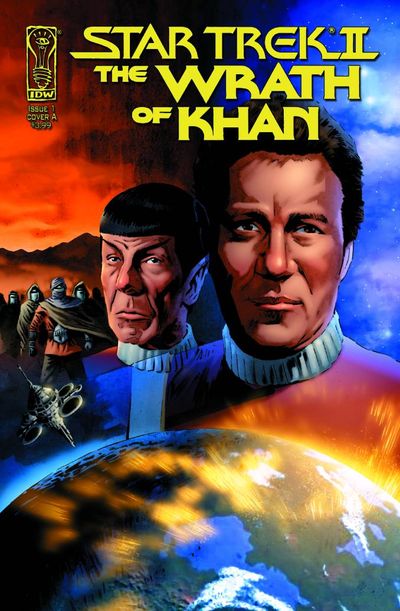
5. Point of View and Attitudes As Trottier says, “Everyone has a belief system, a perception of reality that is influenced by past experience, a point of view that has developed over time.” No two people may react alike to the same situation. Your character has past experiences that influence how he or she will react to a situation. Two characters may reach the same point with vastly different attitudes about the event. In “Star Trek II: The Wrath of Khan,” written by Jack B. Sowards, both Captain Kirk and Khan find themselves facing off against each other after many years. Khan views the last fifteen years as harsh exile, that Kirk destroyed everything that he loved, including his beloved wife. Kirk viewed what he did as giving Khan a second chance. They each have a different view of how they got to the same place, and thus also have different opinions about how their showdown must end and who is in the right.
6. Room to Grow You have given your character a set of parameters. His or her personality, a sense of self, these things are the starting points for your character. The big event happens in Act I, to draw the character out, to start him or her on their quest. Your character should exhibit growth, have a realization about themselves, something which connects the audience to your character. At the beginning of “The Outlaw Josey Wales,” Josey is a loner with a scar on his face and a dark past. But as he continues on his journey, he comes into contact with a group of misfits who adopt him as their leader, whether he likes it or not. While his outwardly gruff demeanor does not change much, the audience gets to see the character grow and change throughout the movie.
7. Believability Making your character seem human can be difficult, but it will reward your audience with a much richer experience. Movie characters usually have one underlying focus—their goal—which tends to be not how real life works. People have several things going on at once and very rarely get to focus on once task to complete. So even though the situation or the plot may bend the rules of believability, give your character human emotions, human traits, and values. In “Ghostbusters,” written by Dan Aykroyd and Harold Ramis, the film succeeds not only because of the effects and the humor, but we see humanity in each of the four Ghostbusters and how they each react to a situation, especially Ernie Hudson's portrayal of Winston, the only non scientist of the group. His character is the everyman, someone who signed up for a job and ends up in way over his head.
8. Details These are the traits that make your character memorable. Do not boil your characters down to caricatures, but give them quirks and tics to flesh them out. In “Die Hard,” written by Jeb Stuart and Stephen E. de Souza, John McClane talks to himself throughout the entire movie. In the beginning as a fish out of water New York cop in Los Angeles, it’s because he’s bemused by the world he finds himself in. Later, as terrorists have taken over the Nakatomi Plaza, he does it to keep himself sane as he also tries to keep himself alive.
9. Research This comes down to the writer being willing to spend time developing characters, making them believable, and doing whatever necessary to create whole characters. Go the library, interview people in professions upon whom you'll be basing a character, figure out what really makes your character tick. This may take your character away from your original version, but it may be better for the screenplay. This will also help find your character's voice.
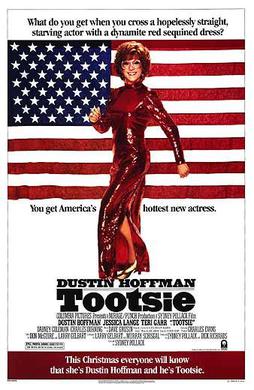
10. A Strong Supporting Cast Your main character will carry the story, but you need to fill out the rest of your screenplay with engaging secondary characters. Don’t short change the opposition; a sidekick is important, as is a love interest or love interests. “Tootsie,” written by Murray Schisgal and Larry Gelbart is an excellent example of a large ensemble working well together. Dustin Hoffman is clearly the main character as Michael/Dorothy, but the roles of the opposition (Dabney Coleman), love interests (Jessica Lange and Terri Garr), the sidekick (Bill Murray), not to mention the minor characters that populate the world of New York drama, contribute to a well written screenplay.
A screenplay has several facets that have to come together to be successful. Developing your characters and giving them strong foundations will be one way to create a connection with your audience and to bring your story to life."
 

Friday, 12 October 2012

Character Profile Exercise

In order to get us thinking more about characters in our film, we did a character profile exercise where we had to imagine that we were stuck in a lift for two hours after a long shopping trip and from that scenario we had to imagine the person that we would most want to be with us in that situation. We had to describe various different aspects of this person such as what they looked like, what their voice was like, how they were dressed and their personality. After this, we had to imagine the person we would least like to be stuck in a lift with.

After imagining our characters,we had to create a Big Brother audition tape for either our nice character or our nasty character. I was working with Lizzie Starling and we thought that it would be much more interesting to do our audition tape on our nasty character. We envisaged our annoying character to be loud, melodramatic, socially awkward, dominant, pretending to be drunk and having multiple personalities. When filming, we were limited to people that we could use to act for us but luckily we found Henry (who was the photographer for our recreation of 'My Beast Friend') to act for us and we're very happy with the performance that he gave us.

Thursday, 11 October 2012

Audience Feedback from Pitch #3

After showing my third pitch (my apocalypse idea) to my media class, I received some feedback.

Because of the fact that I haven't yet got a concrete storyline for my film idea, i was expecting some questions about the plot. Hopefully though, those questions will be answered soon!


Lily Vosper: I like the idea of location and the use of saturation. I think as long as it has a solid storyline it will be brilliant.
Jake Brownbill: I love the look of the location. It's eerie, weird and definitely post-apocalyptic. With such a cool location, you have headway to make something either really subtle or really ambitious.
Beatrice Norman: The location is really cool and you could do some really good effects with that! But I think it also depends on what story you could come up to go with it.
Alice Leng : I loved the location, and think that you could really do something great with that as already you have the advantage of atmosphere and therefore a realistic feel. Firstly are you able to film there, do you need to gain any permission etc? And also the idea is starting to be developed, with a character a starting to emerge but have you thought about what will actually happen during the short?
Caitlin Robbins: This is a really good idea, I think you need to get a solid idea before committing to the film. Have you thought about how many characters you're going to have or how they survived? I think it would work really well once you've got a plot.
Lizzie Starling: Great location, and will work really well for the theme and idea you have in mind. It will create a really strong, realistic piece; as well as standing out and being original. Do you have more ideas in mind for storyline?
Nicole O'Malley: Really liked how you inserted clips of the location so that we were able to understand your 'vision'. Obviously you haven't yet thought of an actual idea, but have you yet considered characters, props etc. which will fit with the genre?
Farah Hamouda: I like the research you have done into your location, I think it is unique and will work very well. I like the idea of a post-apocalyptic theme - that stuff REALLY scares me! You'll need to start planning to make sure that you can use the location and the actual plot - what else is going to happen? Are any characters going to be introduced? I like it :-)
Martha Rumney: Clearly you have thought a lot about your idea, regarding location. I think it’s a great basis, you’re very lucky to have found such a great location for you to work with. I think a lot of people will connect to this as I’m pretty sure everyone has some kind of interest in the apocalypse. Looking forward to hearing your plot idea. 
Ben 'Gary' Hurst: Very good imagery of what you would plan how you plan to use the scenery. What story would stand out against other short films that involve a post-apocalyptic world?
Aimee Shingfield: I like the location, and the photos you incorporated are great. However, you haven't said much about the plot, just the basic idea - which is a good one! Just research more into the location, and the apocalypse etc. Have you thought about what kind of characters you would have in the short film, and how many?